On April 24, as deputy director of the Tucson Jewish Museum & Holocaust Center, I hosted a half-day convening on immigration and border issues for local congregational clergy. Produced in collaboration with several of my Christian colleagues, the program aimed to promote understanding of the situation on the ground in Southern Arizona, map available resources, and raise awareness of faith-based groups already working in this area. The program was designed to help clergy build both the collective capacity and the congregational commitment needed to support their most vulnerable neighbors and examine the obligations that faith communities have toward refugees, asylum seekers, and immigrants.
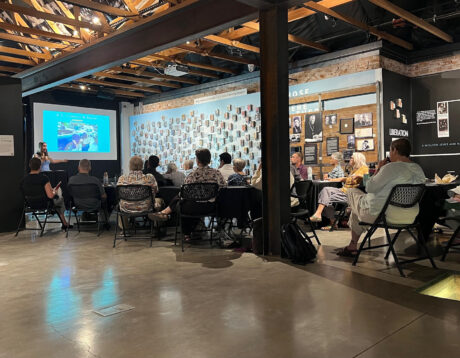
Twenty-five faith leaders from 19 congregations spent the day in conversation and fellowship. For many, it was their first visit to the museum. Immigration attorney Alba Jaramillo, a longtime local advocate for human rights and co-executive director of the Immigration Law & Justice Network, presented the keynote and shared disturbing accounts of the current immigration and detention landscape. She cited the increased militarization and violence surrounding immigration enforcement, even though immigration policy is a matter of civil rather than criminal law in this country.
Participants also heard from faith leaders whose congregations are serving local immigrant and refugee communities. Some have started this work more recently, while others can trace their engagement back to the origins of the Tucson Sanctuary Movement more than 40 years ago. Most importantly, clergy were invited to identify how their congregations are already serving the immigrant community and what support or resources they might need to take the next step.
Much of the conversation explored how to connect with existing resources for the immigrant community, such as rapid-response and mutual-aid networks, immigration court accompaniment, and “Know Your Rights” training. The Good Neighbor Interfaith Coalition meets monthly and offers a way for people of diverse faith traditions to get involved in migrant ministry.
Holding an immigration forum in the Holocaust Center invited participants to reflect on both historical lessons and contemporary moral responsibilities. Surrounded by photos of individuals who survived and families who perished, participants spoke about the dynamics that characterize our current immigration policies.
The Tucson Jewish Museum and Holocaust Center is not only a place of remembrance. When it is animated this way, by people of different backgrounds and faith traditions, it becomes a place where the community can think together about democracy, human rights, pluralism, and civic responsibility today. History does not stay sealed behind glass. It informs the conversation in the room. The museum is supported by Jewish Philanthropies of Southern Arizona (JPSA) as part of its work to shape the future of Jewish life in Southern Arizona.