
 Tucsonan Seth Schindler has pursued diverse occupations, including street peddler, strawberry picker, clam digger, lumberjack, organic farmer, anthropologist, museum curator, sculptor, real estate developer, and stockbroker. But at 79, a title he savors goes back to one of his earliest dreams: writer.
When Schindler was a junior in high school — he grew up in Bedford-Stuyvesant, Brooklyn, “before it was hip” — a play he wrote was published and won an award.
By age 20, he’d given up creative writing. Busy with other ventures, including raising a family, he only returned to writing around age 60. He’d retired early, he explains, and laid up after back surgery, started writing a novel.

While that work, like many first novels, remains unpublished, in 2024, ELJ Editions published his novelette, “The Time Golem,” which was inspired by one of his sculptures. His short stories have been published in literary magazines and have been finalists for the Gival Press Short Story Award and the Tucson Festival of Books Literary Awards.
The University of Arizona Press published Schindler’s nonfiction book, “Sowing the Seeds of Change: The Story of the Community Food Bank of Southern Arizona” in 2022.
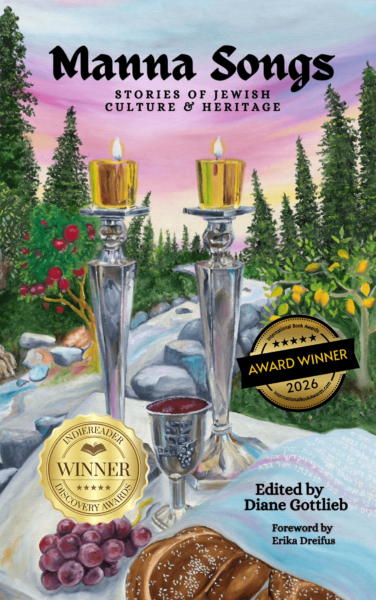
Most recently, ELJ Editions asked him to contribute an essay for “Manna Songs: Stories of Jewish Culture & Heritage,” a collection that won a 2026 International Book Award and an IndieReaders Discovery Award.
His essay, “Paradise,” is set in New York’s Catskill Mountains, the Borscht Belt where Jewish American families, excluded from gentile-owned resorts, found refuge from the city’s heat — and where a 10-year-old Schindler spent one glorious summer in the 1950s.
Denizens of the Catskills will find details of his family’s lodge hauntingly familiar: the allure of the five-cent pinball machine, the tarnished metal counter where Schindler drank “endless egg creams, black and white ice cream sodas and chocolate malteds,” and the dining room/gambling parlor where Shimmy the Pickle King and other peddlers spent hours playing poker and pinochle, drinking, and kibbitzing.
Drawing on his skill as a fiction writer, Schindler brings to life pivotal memories from that long-ago summer, exploring the limits of a 10-year-old’s knowledge and the hard truths he’d only learn much later.
The 32 stories in “Manna Songs” span locales from the U.S. and Israel to Scandinavia and Spain, encompassing a wealth of subjects. In the introduction, editor Diane Gottlieb writes, “We’ve got stories! Weddings. B’nai Mitzvot. Candlesticks, tallit, old dishes, new traditions. … Jewish Vikings, Jewish poets, grandmas, grandpas, moms, dads, lovers, kids. Coffee, bookmarks, floating burials, and dreams. Synagogues, prayers, Torah…”
Although some of the stories, like Schindler’s, are bittersweet, the overall mood is joyous.
As a review from the Jewish Book Council proclaims, “At an extraordinarily complicated time in our country and in our world, this beautiful little book appears as a balm for it all.”