
This article is part of a series around Jewish early childhood education at the Tucson J.
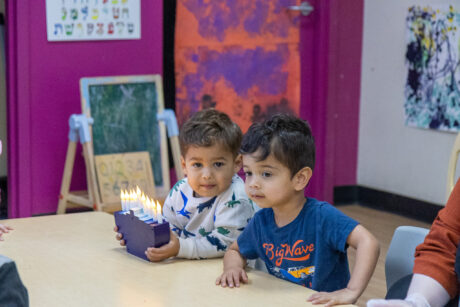
It has been over 30 years, and my parents still recall meeting the parents of a child in my brother’s class, who ultimately became dear friends. Their shared experience as parents, the leadership roles they took on together, and ultimately, how those moments extended beyond drop-off and pick-up encouraged their friendship to flourish. And today, I hear from parents who have bonded over shredding potatoes for latkes to be enjoyed in class or developed relationships before or after school in the Tucson Jewish Community Center’s ECE Open Space. Long before a Jewish child celebrates their b-mitzvah, they are saying hamotzi at snack time or dressing up for a Purim parade — learning the rituals and traditions of Jewish culture through fun and play. These relationships and experiences in Jewish Early Childhood Education (ECE) provide families with an entry point into Jewish communal life, creating opportunities for connection, belonging, and continued engagement beyond the early childhood classroom.
Beyond personal stories, what do we know about the potential impact of a family’s Jewish journey when they enroll a child in a Jewish ECE? Research from the Collaborative for Applied Studies in Jewish Education’s Exploring Associations Between Jewish Early Care, Education and Jewish Engagement study finds that Jewish ECE can contribute to increased Jewish engagement among families during their participation in Jewish early childhood programs. While the study was published in March 2020, the research provides incredible insight and “the findings remain current and relevant” says Veronica Maravankin, Vice President JCC Association of North America and Sheva Center Director.
The research finds that Jewish ECE programs see their role not only as educating children and parents about Jewish practices and values, but also as helping families find meaning in Jewish life and build relationships with one another. The impact reported by parents is significant. As a result of enrolling their child in Jewish ECE:
- 77% felt more a part of their local Jewish community.
- 76% made friends who are Jewish.
- 71% built upon a Jewish tradition in their home or family.
- 63% saw greater relevance of Judaism to their own lives.
- 51% started a new Jewish tradition in their home or family.
These findings demonstrate the incredible potential that enrollment in a Jewish ECE has to cultivate a strong and connected Jewish community beyond the classroom. Enrollment is the meaningful first step that truly opens the doors to relationships, Jewish practice, and ideally participation in the greater Jewish community.
Jewish ECE provides a critical entry point into Jewish communal life. For communities thinking about the future of Jewish life, this may be one of the most important opportunities in front of us. When ECE, PJ Library, and other community initiatives work together, families have multiple pathways to build relationships, explore Jewish identity, bring Jewish experiences into their homes, and develop a lasting connection to Jewish community.
In Tucson, families have choices when looking at Jewish ECE options, including:
Tucson J: Serves children 6-weeks to 5 years with a play-based curriculum, using the Sheva Lens framework to instill Jewish values, honoring the uniqueness of every child, and engaging families as partners.
Lamplighter Chabad Preschool: Serves children ages 1-5, blending authentic Jewish traditions and customs with academic subjects, personal development, values, socialization, and learning skills.
Tucson Torah Center Early Childhood Center: Serves ages 1-5, combining a culture of kindness, curiosity, and personal growth with strong Jewish and general studies.
Kol Ami Synagogue Strauss Early Childhood Education Center: Serves ages 6 weeks to 5 years, with age-appropriate activities to challenge children to develop their social, emotional, intellectual, physical and spiritual potential.
Each of these programs provides families with an opportunity to begin or deepen their relationship with the Jewish community across Southern Arizona. Many congregations and organizations have additional opportunities to involve families with young children, including Tot Shabbat and special pop-up events where children are engaged and adults can get to know each other.
Jewish ECE can be a child’s first Jewish classroom, and this experience may very well just be a family’s first entry into Jewish community. The relationships, experiences, and traditions that begin in these early years can become part of a child’s Jewish identity and a family’s Jewish story for years to come. As we think about the future of Jewish life in Southern Arizona, the impact of these early connections — and the possibilities they create — matter.