
Dedicated to the Memory of my father, Louis Manelis
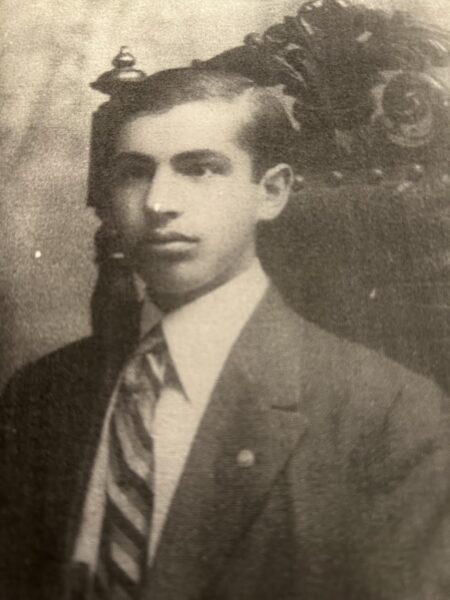
My father was an emotional man who cried easily and was known in the family as a softy. He was exceptionally hard working and good hearted to a fault … attentive and solicitous of my grandmother who lived a few blocks away, and generous to those in need, Jew and gentile alike. Admirable qualities to be sure.
But as loving and caring as he was to me and to others, my father had a dark side. He was argumentative and easy to anger. At dinner, I always sat uncomfortably, awaiting some outburst that would disrupt the family dynamic and make normal conversation impossible.
Because of this behavior, I almost never invited friends over to the house, fearful they would witness my father’s loss of control — and I would be embarrassed. I remember coming home with friends one afternoon. As we approached the back door, I heard my father yelling at my mother over some incident. Too late to turn back, I apologized to my friends and said my father had been working very hard of late and was probably tired. What I didn’t say was that this behavior was almost a daily occurrence.
Years later, trying to make sense of a difficult childhood, a therapist suggested my father suffered from PTSD (Post Traumatic Stress Disorder). How could that be? I asked. I didn’t know of any trauma that could have caused such erratic behavior.
It was not until I was in my 60s, many years after my father died, that I discovered the tragedy that had upended his life at an early age and left him forever wounded. And yes, he most likely suffered from PTSD.
How well do we know our parents? And how well do our children know us?
The Family Secret
I was always interested in my family’s history and often asked older members about their lives in Eastern Europe. But in all my conversations, I rarely asked about their early years in New Bedford, Massachusetts, where I grew up and where my father and his extended Liss family settled on coming to the United States.
Years later, when I visited Ellis Island, I discovered in the main exhibition hall a list of the most popular destinations during years of heavy immigration to the US, the later half of the 19th and early 20th centuries. New Bedford was at the top of the list. During those years, it seems, the city was not only the second biggest whaling port in the world, but it was the richest city in North America. Jobs were plentiful. At least I knew why my family had settled there.
But by the time I was born, in 1938, whaling was a thing of the past, along with the many industries that supported it. As a result, the city’s affluence was just a memory.
The city’s reversal in fortune affected the extended Liss family and explained why some members had decamped from New Bedford and gone south to live in the Washington, D. C., area. They had hopes of finding jobs and business opportunities that no longer were available in New Bedford. Family members were devastated by the separation as all the siblings were very close.
Although the family was now divided geographically, we still referred to ourselves as the Liss family and celebrated our common ancestors. Needless to say, the distance made it difficult to see one another, but we tried to connect whenever we could.
I think the separation might be one of the reasons that my father’s first cousin George Liss (of our southern branch) developed a strong interest in our Liss family history. George spent much of his spare time researching and communicating with people across the globe, determined to find out as much as he could about our family’s origins.
George knew I shared his fascination with our family history, and often emailed me his latest findings. He was thrilled that someone else in the family shared his enthusiasm. But when he sent me the Liss Family Tree he had created, my enthusiasm changed to shock. Suddenly, everything I knew about my father and my grandparents seemed no longer valid.
At the top of the list were the matriarch and patriarch of the Liss family, Hinda and Dov Baer Liss. Below their names were their children, grandchildren and great grandchildren.
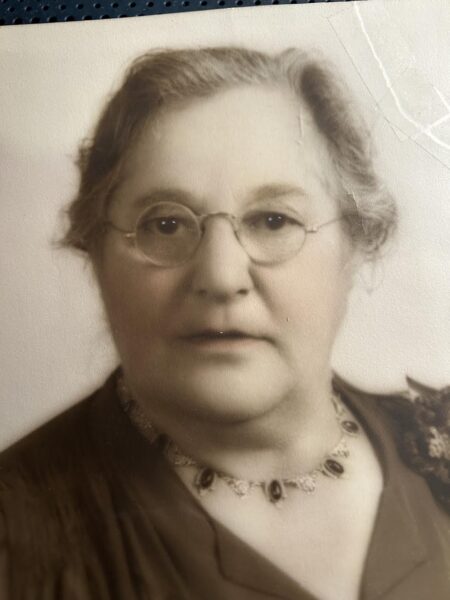
I immediately located my grandparents, Zolman and Sara Liss Manelis. Listed below their names were three children: a son (my father) and two daughters, Bee and Sheindel. But I only knew my Aunt Bee. Who was Sheindel? I had never heard of her. Next to Sheindel was a “d”. I assumed the “d” stood for deceased.
When I asked George about Sheindel, he said he didn’t know much, but thought she died young, perhaps killed by a horse and wagon. Where, when, why, he didn’t know. He referred me to our cousin Beverly, one of the oldest Liss family members who lived in Warwick, Rhode Island, not far from New Bedford. So on a trip from New York to New Bedford, I visited Beverly to see what I could learn about this mysterious person and why her existence was such a secret.
According to Beverly, Sheindel’s English name was Jennie. Jennie, she said, had indeed been killed by a horse and wagon in New Bedford right in front of my grandparents’ house. She didn’t know anything else.
I couldn’t believe I knew nothing about the existence of my father’s second sister and this terrible family tragedy. And I couldn’t help but wonder how this event impacted my father and my grandparents.
With just these few facts, I embarked on what turned out to be almost two years of research. I was living in Boston by then and travelled to New Bedford several times. My first stop in October of 2016 was City Hall to get Jennie’s death certificate. The clerk kindly pulled out the original document, which dated the accident to October 9, 1907. Jennie was all of nine years old. It said she died of internal injuries (consistent with a horse and wagon accident) and was buried in the Hebrew cemetery. The date of her death and age enabled me to determine that my father was only 11 at the time, only two years older than his sister. I visited the Jewish cemetery three times but could not locate her grave. Many old stone faces were worn away and the writing illegible.
On another trip, I searched for information about the accident. I visited the one remaining synagogue in New Bedford, Tifereth Israel, and the morgue at The New Bedford Standard Times newspaper. I even called St. Luke’s Hospital to see if they had any records from 1907. They did not. Eventually, I turned to old newspapers in the local library. It turned out there were four papers in 1907 and the library did not have complete sets of any of them. I found nothing. As a last resort, the librarian referred me to the library of the University of Massachusetts at Dartmouth.
My husband, Shelby, was with me when we visited and helped me select the appropriate rolls of microfiche from the four newspapers. Then he rolled and I watched, hoping to find some reference to the tragedy that killed Sheindel/Jennie.
I was expecting a small notice. Instead, after several hours, we found what we were looking for. It was anything but small. The headline was in large letters and was six lines. It was the lead article on a local news page. The article was devastating.
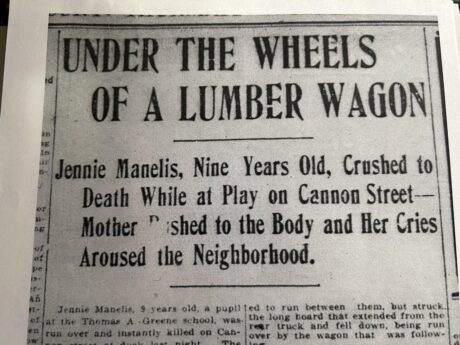
While the writer did not mention my father specifically, it did talk of the accident, which occurred at dusk when the neighborhood children were at play.
I can only conjecture that my father and Sheindel were playing outside at the end of the day. Perhaps as the older sibling, he was responsible for keeping an eye on her. Perhaps he blamed himself for what happened. The writer said it was unclear whether she had tried to jump on the wagon or not, but she fell and was crushed under its wheels. The headline described my grandmother (who it turns out was eight months pregnant) running into the street screaming. I could hardly imagine the scene.
There it was! The event that left my father forever traumatized and led to a lifetime of unresolved turmoil and grief. How much pain he must have experienced that obviously never left him and so disrupted our lives.
When I thought of why there was never any mention of Sheindel/Jennie and the accident, I decided it was due to the tragic nature of her death, her young age, and the trauma it caused my grandparents, my father and the whole family.
My grandmother never spoke of her loss, but once, when I asked her why she called my Aunt Bee “Bubbie,” Yiddish for old woman or grandmother, she said she wanted my aunt to live a long life. Now, even that made sense.
So, I am asking the question again … do we really know our parents?
Not every family has a tragic tale it is hiding. But in most families, so much remains unsaid, unexplained. And then, when we think of our own children, do our children really know us?
My father was a loving, caring man, and I think of how much he suffered over his lifetime because of this tragedy. I remember him on this father’s day with special love and appreciation for the man he was.
***
For a detailed description of my search:
Avotaynu, Volume XXXII, Number 4, Winter 2016