
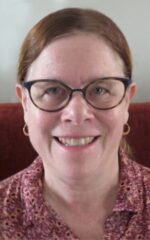
Leora Freedman, the author of four novels and numerous short stories that explore aspects of the Jewish experience, lives in Toronto. But back in the day, she was a student at the University of Arizona, graduating from the creative writing program with a Master of Fine Arts in 1985 and winning first place in the Robert Downs Fiction Contest, among other awards.
Her first novel, “The Ivory Pomegranate” (Geffen Books, 2002), was set in the desert Southwest and focused on students confronting their Jewish identities – along with family relationships and romantic entanglements – amid an anti-Semitic uprising on a college campus.
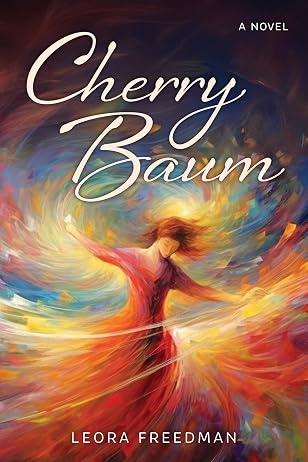
In Freedman’s new novel, “Cherry Baum” (KTAV, 2025), a Jewish blogger and mother of four realizes she has the power to heal the sick, communicate telepathically, and soul-travel through time and space. After deciding to go public as a holy woman, she quickly reaches the point where she can’t turn back, despite the fears of her family as their Toronto home fills with Cherry’s grateful followers.
“Cherry Baum” is inspired in part by the author’s family roots in the Charlop rabbinic dynasty, with a tradition of descent from King David, and even more by her nearly decade-long habit of reading Hasidic tales as retold by Martin Buber.
“They’re very comforting, wonderful stories of holy men and the wisdom they imparted, the powers that were attributed to them, and the way they fit into their communities,” she explains.
“I really liked that a lot of the stories are about struggling with faith, or trying to have some kind of faith, or or to feel joy in life,” she adds.
“And then I started thinking, as we do now, where are the women?”
Eventually she found that there were indeed Jewish holy women, including the famously controversial “Maiden of Ludmir” born in early 19th-century Russia, who functioned as a Hasidic leader and later settled in Jerusalem. Freedman recommends Nathaniel Deutsch’s book, “The Maiden of Ludmir: A Jewish Holy Woman and Her World.”
While the Maiden of Ludmir struggled against society’s expectation that she marry, Freedman’s Cherry, who blogs as “Diaspora Mom,” is happily, if messily, enmeshed in family life. We see Cherry hold court with her ever-growing circle of followers and accompany her on wonderfully evocative soul travels, but we also see her folding laundry and shopping in the No Frills grocery store.
Freedman explains that she wanted to take the traditional structure of Hasidic tales, in which a holy person is reluctant to reveal themself and eventually causes controversy in their community, “and place a character like this in our present time, in Toronto.”
Despite its fantastical elements, Freedman doesn’t consider “Cherry Baum” to be magical realism, which she associates with Latin American authors such as Gabriel Garcia Marquez.
“I think it has a different vibe,” she says of her book. “As a Jewish writer, I’m looking more at our traditions of fantasy or legend, you know, that kind of creativity. There’s a lot of very strange things in the Talmud, too, that are quite imaginative.”
Born on the Lower East Side of Manhattan and raised in Queens, New York, and Norwalk, Connecticut, Freedman has also lived in British Columbia and Israel with her husband, Eric Freedman, a photographer. She taught English as a foreign language at Hebrew University in Jerusalem and now teaches English language at the University of Toronto, supporting multilingual students. She has won writing grants and awards from the President’s Fund of the State of Israel, the Israeli Committee for the Absorption of Outstanding Immigrant Artists, the Henfield Foundation, the Southern Humanities Review, and the Toronto Arts Council.
Freedman’s other novels are “The Daughter Who Got Away” and “Parachuting.” Her short fiction has been published in literary magazines, including the Virginia Quarterly, Southern Humanities Review, Frontiers, Room of One’s Own, and Northeast Journal. Her stories have also been collected in the Passages North Anthology and a chapbook, “The Summer Flowers and Other Short Stories.” Her historical flash fiction was featured regularly in Toronto’s weekly Jewish Tribune.
For more information, visit Freedman’s website.