Many Jews consider themselves Jewish but not religious. How do these Jews find meaning in holiday celebrations, lifecycle events, and their approach to their shared heritage?

Rabbi Jodi Kornfeld, a past president of the Association of Humanistic Rabbis, will provide answers at a talk, “Secular and Jewish,” on Sunday, Jan. 4, at 1:30 p.m. at the Tucson Jewish Community Center. The talk is sponsored by the Secular Humanist Jewish Circle of Tucson, with support from the national Society for Humanistic Judaism, and the Tucson J.
Humanistic Judaism centers Jewish culture as the basis for a meaningful Jewish identity.
“It provides a vibrant and living expression of secular Judaism, which is human-centered in philosophy and non-theistic in language,” Kornfeld explains.
“Humanistic Judaism broadly defines Judaism as the collective historic experience of the Jewish people, including all that goes into a culture: art, literature, language, food, music, history, and religion. If someone self-identifies with that experience, they can self-identify as a Jew,” she says.
“Rather than define their Judaism by what they do not do or believe, many Jews consider themselves Jewish and secular, or Jewish and humanist, or Jewish and a part of an interfaith/intercultural family, and find a home in Humanistic Judaism,” she adds.
Kornfeld was ordained by the International Institute for Secular Humanistic Judaism in 2009. She holds a master’s degree and a doctor of science in Jewish studies from Spertus Institute in Chicago.
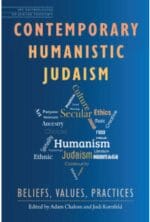 Kornfeld founded Beth Chaverim Humanistic Jewish Community in Deerfield, Illinois, in 2003. She is the co-editor, with Rabbi Adam Chalom, of “Contemporary Humanistic Judaism; Beliefs, Values, Practices” (The Jewish Publication Society, January 2025). The book collects the movement’s most important texts for the first time and answers the oft-raised question, “How can you be Jewish and celebrate Judaism if you don’t believe in God?” with new vision.
The book also examines core positive beliefs in human agency, social progress, ethics without supernatural authority, sources of natural transcendence, and Humanistic Jews’ own authority to remake their traditional Jewish inheritance on their own terms. Copies will be available for purchase.
For more information, contact Susan Rubin at 520-577-7718 or [email protected].