
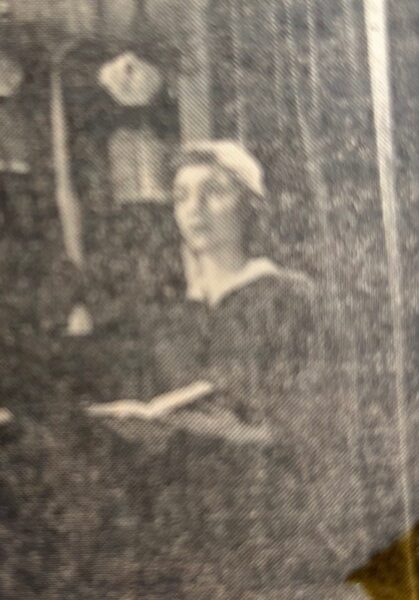
When I was 13 years old, I asked the rabbi of my Conservative synagogue, Tifereth Israel in New Bedford, Massachusetts, for a Bat Mitzvah. Rabbi Bernard Ziskind, a very traditional and serious gentleman, was surprised, and perhaps even shocked. It was 1951 after all, and no girl in my community had ever asked for or participated in such a ritual. During those days, women were not counted in the requisite 10 for Kaddish. There were no female rabbis in the United States. And most synagogue boards were composed of just men.
It wouldn’t be until June 3, 1972, 20 years later, that the Reform Movement would ordain Sally Preisand as the first woman rabbi in the United States. And it was 1985 when Amy Eilberg was ordained by the Conservative movement. Although very controversial to this day, there have been several modern Orthodox women who have completed rabbinic training. They usually are referred to as Maharat or Rabba. The first was Rabba Sara Hurwitz, ordained in 2009.
Rabbi Ziskind, who retired in 1966 after 35 years as the rabbi of Tifereth Israel, could have told me it was not allowed or simply brushed me off. He did neither. Instead, he said he would have to think about it and get back to me. And think about it he did. I have been forever grateful for his sensitivity and thoughtfulness. He took my interest and desire seriously and responded in kind.
I waited some days for his response.
When he called, I was thrilled. The answer was yes. Yes, I could have a Bat Mitzvah, but with a few caveats. It had to be on a Friday night, not Saturday morning. I could intone a Haftarah, but I could not say the blessing over the wine or touch a Torah scroll. Finally, I could not do it alone; I had to do it with another girl. And that was how I managed to have a Bat Mitzvah with my least favorite classmate. But she was the only one willing to prepare a Haftarah.
When the cantor (who will remain nameless) taught me the trop (cantillation) for my Haftorah, he told me was only going to teach me the melodies in my portion because, he noted, “You will never need them again.” With all due respect, the cantor was a lovely man; he was just a product of his time.
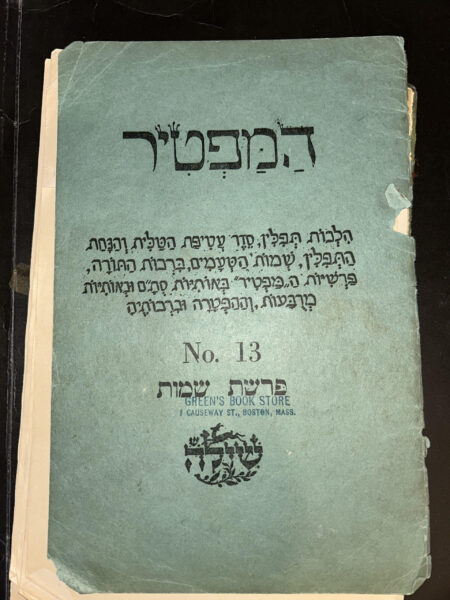
And so, on January 18, 1952, Barbara (not her real name) and I each recited half the haftorah portion for that week. I don’t know about Barbara, but I still have my battered and disintegrating Haftarah booklet.
Some said it was my mother who wanted me to have a Bat Mitzvah and pushed me to approach the rabbi. They were wrong. It was me. All me. And perhaps on some level, I felt it was my right, as my father and grandfather were among the founders of our Conservative shul.
But I believe my desire was shaped and nurtured by my experiences at Camp Pembroke, in Pembroke, Massachusetts, an all-girls, Jewish camp I had attended from the age of 8. Pembroke was one of three Jewish camps founded and owned by the Eli and Bessie Cohen Foundation. The other two were coed: Camp Tevyah in Brookline, Maine, and Tel Noar in Hampstead, New Hampshire. I think the fact that Pembroke was all girls was definitely a plus for me.
It was at Pembroke that I saw women and girls in leadership roles both in a religious setting (leading services, blessing the wine, reading from the Torah, albeit a printed one), and as secular leaders (camp director, head counselor, and music director). Their prominent positions resonated with me. I had women elementary school teachers, but I had never met a female lawyer, doctor, pharmacist, or judge … the list was endless. The women in prominent roles at Pembroke opened my eyes to possibilities that I could not have dreamed of.
I must admit that I was an angry kid. I was big on justice. So after seeing women and girls participating fully in religious services, I was unwilling to accept the status quo of girls at home.
My male classmates did not seem particularly interested in Hebrew school and took their right to a Bar Mitzvah for granted. On the other hand, I loved everything Jewish … the history, the holiday celebrations, the music.
At Pembroke, girls were thrilled to have a role in the Sabbath services we celebrated both Friday night and Saturday morning. We dressed all in white and sat outdoors in the Pine Grove, a magical outdoor temple only a few steps from Lake Oldham. Each week, a different age group would participate in the service. When you were given a responsibility such as reciting the blessing over the wine or reciting one of the prayers for Havdalah, you were excited.
I thrived in that environment.
Hadassah Blocker, a well-known Bostonian with degrees from Radcliffe and Hebrew College, was Pembroke’s director. Hadassah was a formidable figure who believed strongly in instilling a love of Judaism and Zionism into her campers. She said her Orthodox grandfather had approved of her reading the weekly Torah portion from a printed Hebrew Torah. It wouldn’t hurt us. Seems quaint in retrospect.
And so Hadassah became the driving force, role model, and major influence in the lives of Jewish girls throughout New England, many of whom would go on to positions of importance in Jewish life and beyond.
So, “If she could do it …”
Years later, I would be active in the Jewish feminist movement, fighting for the right of women to be rabbis in all denominations. And I was a founder of Lilith magazine (still printing), a Jewish and feminist magazine inaugurated in 1976.
This year, January 18 will mark 74 years since my Bat Mitzvah. I am considering relearning my Haftarah to celebrate the 75th anniversary in January 2027. If only to prove the cantor wrong. As I said, I am thinking about it.
Judith Manelis is a writer, editor, and journalist whose work has appeared in American Jewish newspapers and magazines. Her book “This Shall Tell All Ages: Art, Music and Writings of the Holocaust” was published by United Jewish Appeal.